VIN Check CT: Decode Any Connecticut VIN Before You Buy
Enter a 17-character VIN and get an instant decode: factory specifications, declared safety equipment, crash ratings and open recalls from NHTSA.
A clean-looking title is not proof of a clean car
A VIN check in CT matters more than it does in most states. Connecticut is small. You can drive from the New York line to the Rhode Island line in under two hours, and used cars cross those borders constantly.
That geography is the problem. Every state writes its own rules for branding a title, so a car written off after a flood in one state can pick up ordinary-looking paperwork in the next. The seller does not have to lie to you. The document in their hand can be genuine and still leave out the part you needed to know.
So start with the number. Seventeen characters, stamped in three places on the car and printed on every piece of paperwork that follows it. Type it into the box at the top of this page and you will see what the manufacturer built, what safety equipment the car was declared with, how it scored in federal crash tests, and whether anything on that model year is under an open recall.
Then decide whether the car is still worth your afternoon.
How do you run a VIN check in CT?
Find the 17-character VIN on the dashboard, the driver's door jamb or the registration. Type it into the search box on this page. The whole thing takes about a minute, and the first step catches more fraud than people expect.

Find the number
Seventeen characters on the dashboard, the door jamb or the registration.

Type it into the search box
We verify the check digit before searching, so a mistyped or invented VIN gets caught right away.

Read the free decode
Specifications, declared safety equipment, crash ratings and open recalls, each labelled with where it came from. It appears immediately.

Open the full report if the car is worth it
Title brands, salvage records and the odometer timeline, from NMVTIS and state title files.
Before we search anything, we verify the check digit. The ninth character of a VIN is not arbitrary. It is calculated from the other sixteen using a fixed formula, so a VIN that was mistyped or invented will not add up. If the number in a listing fails that test, you have learned something important before you have driven anywhere.
That matters because VIN cloning is a real fraud. A thief takes the VIN from a legitimate car and puts it on a stolen vehicle of the same make and model, then sells the stolen car to someone who never thought to check. A number that decodes to the wrong make, model or body style is your first warning.
Ask for the VIN before you agree to see the car. A private seller who will not give you 17 characters over text has told you what you need to know.
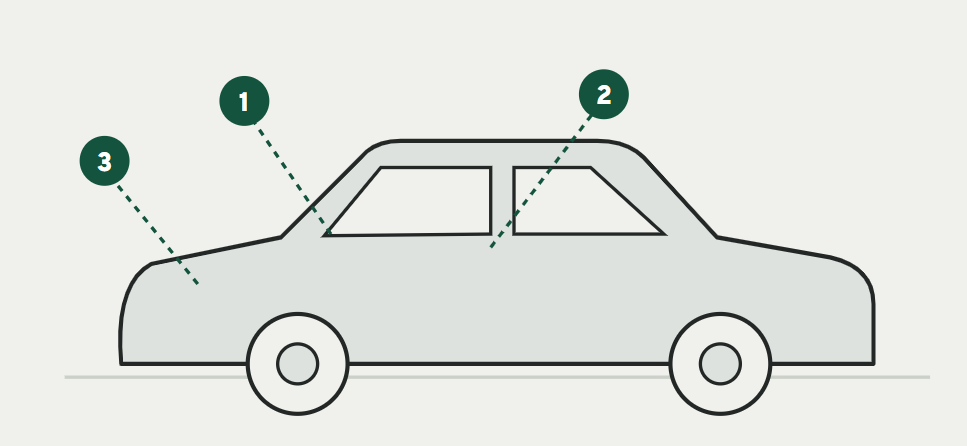
Dashboard, driver's side
Stand outside the car and look through the windshield at the lower corner.
Driver's door jamb
Open the door and read the sticker below the latch. On most cars this sticker also carries the tire pressures and the gross vehicle weight rating.
Engine block
Stamped into the metal on older vehicles. Useful when the other plates are missing or damaged, which is itself worth noticing.
The paperwork
The Connecticut registration, the title, the insurance card and the owner's manual all carry the same number.
Where is the VIN located on a Connecticut car?
Three places on the vehicle, and one in the paperwork. The dashboard plate is the easiest to read without opening anything, and it is where you should start.
Now do the part most buyers skip. Check that all four agree.
The VIN on the dashboard, the VIN on the door jamb and the VIN on the title should match character for character. If one of them is different, or if a plate looks scratched, loose, re-riveted or freshly painted around the edges, stop.
Do not negotiate, do not put down a deposit, and do not accept an explanation. A mismatch is either clerical chaos or something worse, and neither is your problem to sort out.
What does a CT VIN decode show, and what does it miss?
The decode reads the VIN's own structure plus the federal vPIC record from NHTSA. Title brands, salvage declarations, theft records and the odometer timeline come from a different database entirely, and the full report is where you read those.
vPIC — what the car is
Make, model, year, trim, engine, body type, assembly plant, declared safety equipment, crash ratings and open recalls. It describes the car as it left the factory.
NMVTIS — what happened to it
The National Motor Vehicle Title Information System was created by the Anti Car Theft Act, and it is the only vehicle history database in the country that every state is required to report to. It holds salvage, junk and flood brands.
One practical note. You cannot get NMVTIS data from Carfax or Experian as a private buyer. Those companies supply dealerships. Consumer access runs through approved NMVTIS providers, which is what the full report on this site draws on.
Two limits worth stating plainly. Recall campaigns are published by make, model and year rather than by individual VIN. No report names a previous owner either. Privacy law keeps names out of it.
The decode says what it is. The report says what happened to it.
Title brands, salvage and junk records, theft history and the mileage timeline come from NMVTIS, and that is what the full report covers.
Why out-of-state titles are Connecticut's real risk
This is where a Connecticut buyer's exposure differs from a buyer's in Ohio or Idaho.
Title washing is the practice of moving a branded car through states with looser rules until the brand falls off the paperwork. The car ends up with a title that looks ordinary. Connecticut sits within a short drive of several different titling regimes, which makes it a convenient place to sell the result.
The CT DMV knows this, and its own rules show it. Connecticut does not accept a New York salvage certificate, form MV907A, at all. And if a title is branded Salvage Parts Only, Salvage Unrebuildable or Salvage Unrepairable, that vehicle cannot be registered or re-titled in Connecticut under any circumstances.
Not after repairs, not after an inspection, not ever. Someone can still sell you that car. You just will not be able to put it on the road.
Flood damage is the brand that hides best. Water wrecks electrical systems, control modules and safety equipment on a delay, so the car drives fine the week you buy it and starts failing months later. Storm-damaged cars get trucked far from where they flooded, so distance from the coast is not protection.
Odometer rollback is the other one. Digital clusters are reprogrammed with the same tools a shop uses for diagnostics, so the display means very little on its own. A mileage timeline built from title records is what exposes it.
flood-damaged vehicles estimated to be on US roads, according to CARFAX as of August 2025.
vehicles sold each year with false odometer readings, by NHTSA's estimate.
Run the VIN through NICB VINCheck as well. It is a separate lookup covering insurers that represent more than 92% of the market, and it reports theft and salvage claims. It is not a substitute for a title report, but a second source costs you nothing but a minute.
Find out whether this car was written off in another state
A washed title looks ordinary on paper. The brand still sits in the federal record, and the full report is where you read it.
What CT DMV rules apply after you buy?
You have 90 days to register a vehicle in Connecticut after buying it from another state, or 90 days from establishing residency if you are new to CT. Registration is in person at a DMV office, by appointment only.
Test first, then register
Emissions testing or VIN verification has to happen before your appointment. The DMV cannot open your registration file until the test center has transmitted your result. A vehicle four model years old or older needs an emissions test. A vehicle exempt from emissions still needs a VIN verification, done at the same test centers.
Two quiet blockers
Connecticut will not register a vehicle for anyone who owes delinquent property tax or has unpaid parking tickets, and it will not register for anyone whose registration privilege is suspended. Check both before you book the appointment rather than after.
Your town taxes the car
Connecticut taxes cars through your town, not the state, based on where the vehicle is garaged on the assessment date. Budget for it. It is an annual bill, it arrives separately from anything the DMV sends, and it is the item that surprises new residents most.
Salvage and composite vehicles
Salvage vehicles are inspected only at Hamden and Wethersfield. Composite vehicles are inspected only in the Wethersfield lane, at $88, and they have to arrive trailered, with no wheel touching the ground.
For current fees, appointment slots and exemption rules, portal.ct.gov and ctemissions.com are the authorities. You can check your emissions due date by entering your VIN at ctemissions.com.
Check the number before the money moves
Three things worth remembering. Verify the VIN itself first, because a check digit that fails or a plate that does not match the title ends the conversation before you have wasted a Saturday. Read the decode to confirm the car is what the listing claims. Then pull the title records, because a clean-looking document is not the same as a clean history, and in a state this close to this many borders, that gap is where buyers lose money.
A used car in Connecticut is a five-figure decision. The report costs less than an hour of a mechanic's time, and it is the only part of your homework that can tell you a car was written off in another state.
Frequently asked questions
What does a CT VIN check show?
A VIN check returns everything the number itself encodes plus the federal vPIC record: make, model, year, trim, engine, body type and assembly plant, along with declared safety equipment, NCAP crash ratings and open recalls for that model year. Title brands, salvage records, theft history and the odometer timeline come from NMVTIS and appear in the full report.
Does the CT DMV offer an online VIN lookup?
No. The Connecticut DMV does not publish an online VIN lookup tool for the public. It performs VIN verifications in person, at emissions test centers and at its own inspection lanes, as part of registering a vehicle. For titles, registrations and anything official, you need to go to the DMV directly.
Can I look up a VIN by license plate in Connecticut?
Not through public records. Privacy law keeps the link between plates and vehicle records closed to the general public in Connecticut. Some third-party services offer plate-based searches, but a VIN gives you far more reliable results, and you can read it off the dashboard from outside the car.
What does a Connecticut salvage title mean for a buyer?
It means an insurance carrier declared the vehicle a total loss and it was subsequently reconstructed. Connecticut requires a salvage inspection before such a vehicle can be re-titled, and those inspections happen only in Hamden and Wethersfield. Titles branded Salvage Parts Only, Salvage Unrebuildable or Salvage Unrepairable cannot be registered or re-titled in Connecticut at all.
How long do I have to register a car after buying it in CT?
You have 90 days to register a vehicle in Connecticut after buying it from another state, or 90 days from when you establish residency if you are new to the state. Registration is done in person at a DMV office by appointment. Complete your emissions test or VIN verification before that appointment, since the DMV cannot process the registration without the result.
Still deciding on the car?
Enter the VIN, read the free decode, and open the full report before you hand anyone a deposit.-